Laboratory Analyst / Processing Technologist
Resume Sample
A real resume example showing how our interview process uncovered hidden achievements in this laboratory analyst / processing technologist resume
Being qualified isn't enough — you need to be the obvious choice.
We fix your resume with one conversation
What Makes a Strong Laboratory Analyst / Processing Technologist Resume?
A Laboratory Analyst resume must prove analytical expertise and regulatory compliance — not just list testing duties. Hiring managers scan for specific analytical methods (HPLC, GC-MS, spectroscopy), regulatory knowledge (cGMP, USP, FDA), and quantifiable results. This sample demonstrates how to transform generic testing claims into specific analytical achievements that prove both technical competency and industry knowledge.
Why Do Laboratory Analyst / Processing Technologist Resumes
Get Rejected?
Most laboratory analyst / processing technologist resumes get rejected not because of ATS software, but because they don't prove you're better than the other 79 applicants. Generic bullets like "Performed laboratory tests and analysis" don't differentiate you — quantified achievements do.
See how we transform generic statements into interview-winning proof:
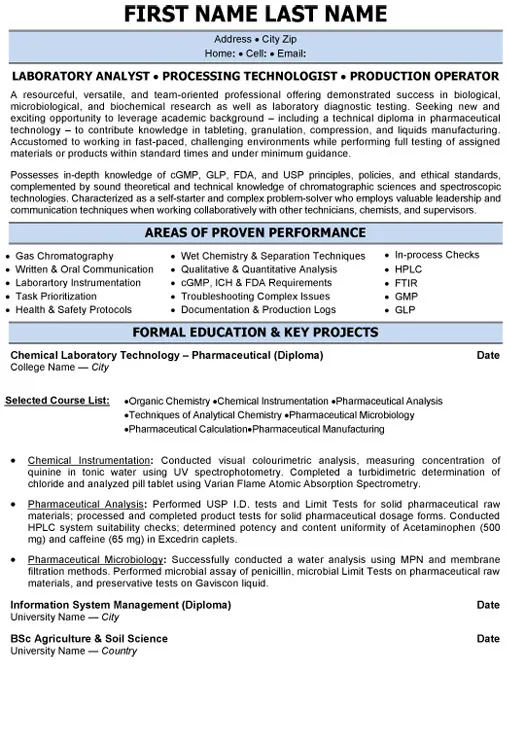
Shows specific USP compliance and quantifies exact pharmaceutical compounds tested
Names specific analytical techniques and instruments, showing technical depth
Demonstrates specific microbiological techniques and pharmaceutical applications
How Do Biotechnology Resume Writers Transform a Laboratory Analyst / Processing Technologist Resume?
Professional resume writers transform laboratory analyst / processing technologist resumes by analyzing job postings for required keywords, extracting specific achievements through targeted questions, quantifying impact with dollar values and percentages, and positioning you as the solution to employer problems.
We Analyze Laboratory Analyst / Processing Technologist Job Postings
We identify exactly what hiring managers search for:
- Core technical skills and domain expertise required
- Leadership and team management expectations
- Industry certifications and compliance standards
- Tools, systems, and methodologies employers mention
We Extract Your Achievements
Our 1-on-1 interview uncovers:
- Specific results and outcomes you've delivered
- Team sizes and stakeholders you've managed
- Problems you've solved that others couldn't
- Metrics you didn't think to track or quantify
We Quantify Your Impact
We find the numbers that prove ROI:
- Revenue generated, costs saved, or budgets managed
- Percentage improvements in efficiency or quality
- Scale of operations, projects, or portfolios
- Time saved or deadlines consistently met
We Position You as the Solution
Your resume proves you solve employer problems:
- Delivering results under pressure and tight deadlines
- Leading teams and managing cross-functional stakeholders
- Driving improvements in processes and outcomes
- Bringing specialized expertise competitors lack
Listen to a Real Resume Interview
Hear how our writers extract achievements from biotechnology professionals.
What Does a Laboratory Analyst / Processing Technologist Resume Interview Look Like?
A laboratory analyst / processing technologist resume interview is a conversation where our writer asks targeted questions about your projects, probes for specific details, and extracts achievements you'd never think to include.
Performed USP I.D. tests and Limit Tests for solid pharmaceutical raw materials, processed and completed product tests for solid pharmaceutical dosage forms. Conducted potency and content uniformity tests on tablets containing acetaminophen (325 mg) and caffeine (65 mg) in Excedrin caplets.
Every bullet on this resume was created through this same process.
Schedule Your InterviewHave questions? 1-877-777-6805
Watch How We Transformed This Resume
See how our interview process uncovered achievements and turned them into interview-winning proof.
Get Your Resume Transformed
What a Laboratory Analyst / Processing Technologist Resume Example That Gets Interviews Looks Like
A complete laboratory analyst / processing technologist resume is typically 1-2 pages and includes a professional summary, core competencies, detailed work experience with quantified achievements, education, and certifications. Here's an actual resume created through our interview process.
Which Laboratory Analyst / Processing Technologist Resume Example
Do You Need?
The laboratory analyst / processing technologist resume you need depends on your career stage:
Moving Into Laboratory Analyst Roles
Your resume needs to show analytical thinking beyond routine testing
Questions We Ask in Your Interview:
- Have you validated or modified testing methods?
- What decisions have you made based on analytical results?
- How have you troubleshot analytical problems independently?
What We Highlight on Your Resume:
- Method development or validation experience
- Independent problem-solving and troubleshooting
- Data interpretation and trend analysis
- Regulatory compliance knowledge
- Cross-functional collaboration with R&D or production
Already a Laboratory Analyst
Your resume needs to demonstrate leadership and advanced technical expertise
Questions We Ask in Your Interview:
- Have you led method transfers or validations?
- What training have you provided to junior staff?
- How have you improved laboratory efficiency or accuracy?
What We Highlight on Your Resume:
- Advanced analytical method expertise
- Team leadership and training responsibilities
- Process improvement and efficiency gains
- Regulatory inspection support
- Cross-departmental project leadership
How Do You Write a Laboratory Analyst / Processing Technologist Resume That Gets Interviews?
To write a laboratory analyst / processing technologist resume that gets interviews, focus on four key sections:
- Professional Summary — highlighting your experience level and specialty areas
- Skills Section — matching keywords from your target job postings
- Work Experience — quantified achievements using the Problem-Solution-Result format
- Credentials — relevant certifications and education
Most Laboratory Analyst resumes list the same basic testing duties and generic analytical skills...
What Should a Laboratory Analyst Put in Their Summary?
Your summary must immediately establish both your technical expertise and industry knowledge
Lead with your years of experience and specific analytical techniques, then highlight regulatory compliance and industry focus
For junior roles, emphasize your analytical foundation and eagerness to take on method development
Expert Questions We Ask:
- "What analytical techniques have you mastered?"
- "How have you contributed beyond routine testing?"
For current analysts, focus on advanced techniques and leadership contributions
Expert Questions We Ask:
- "What complex analytical challenges have you solved?"
- "How have you improved laboratory operations?"
How Should Laboratory Analysts Structure Their Skills?
Show both technical instrumentation expertise and regulatory knowledge
Balance hard analytical skills (HPLC, GC-MS, spectroscopy) with regulatory compliance (cGMP, GLP, USP)
Technical skills should demonstrate hands-on competency with multiple analytical platforms
Expert Questions We Ask:
- "Which analytical instruments are you most experienced with?"
- "What regulatory standards do you follow?"
Strategic skills like method validation, data integrity, and team leadership become critical
Expert Questions We Ask:
- "Have you developed or validated analytical methods?"
- "How do you ensure data quality and compliance?"
How Should Laboratory Analysts Present Experience?
Every role should demonstrate both technical execution and analytical thinking
Open each role with the analytical scope, then detail specific methods, instruments, and regulatory compliance
Show progression from routine testing to independent analysis and problem-solving
Expert Questions We Ask:
- "How has your analytical responsibility grown?"
- "What complex testing have you performed independently?"
Quantify impact through accuracy improvements, efficiency gains, and regulatory compliance
Expert Questions We Ask:
- "How have you improved analytical processes?"
- "What regulatory inspections have you supported?"
What Credentials Matter for Laboratory Analysts?
Prove both scientific foundation and practical analytical training
A degree in chemistry, biology, or related field, plus specific analytical certifications
Your degree provides the foundation, but practical lab experience matters more than advanced degrees
Expert Questions We Ask:
- "How has your education prepared you for analytical work?"
- "What additional training have you pursued?"
Advanced certifications in analytical methods or regulatory compliance demonstrate expertise
Expert Questions We Ask:
- "What specialized analytical training have you completed?"
- "How do you stay current with analytical techniques?"
Skip the guesswork — let our expert resume writers ask these questions for you.
Schedule Your Resume InterviewHow Does a Resume Interview Extract
Your Laboratory Analyst / Processing Technologist Achievements?
A professional resume interview extracts laboratory analyst / processing technologist achievements by probing into specific projects, uncovering the goals you were trying to achieve, documenting the systems and processes you implemented, and surfacing challenges you overcame.
What Projects Should You Include
on a Laboratory Analyst / Processing Technologist Resume?
Include projects that demonstrate scope, stakes, and significance. We probe to understand the project value, team size, and your specific role.
How Do You Show Business Impact
on a Resume?
Connect your work to business outcomes by documenting the company's objectives and how your contributions achieved them.
What Systems and Processes
Should You Highlight?
Document the specific systems, processes, and strategies you implemented. This is where your expertise becomes visible.
How Do You Present
Challenges Overcome?
Describe challenges you faced and how you solved them. Problem-solving examples prove you can handle obstacles.
The Power of a 1-on-1 Resume Interview
No cookie-cutter calls. Your interview length matches your career complexity. We ask the questions you can't ask yourself.
Telephone Interview
- Students / New Grads
- Specialists, Analysts, Coordinators
- Targeting mid-level positions
Telephone Interview
- Individual Contributors
- Managers
- Career Changers
- Seeking Promotions
- Masters / Ph.D Holders
Telephone Interview
- Senior Managers
- Directors
- Department Heads
- Senior Writer Assigned
Telephone Interview
- Vice Presidents
- C-Suite Executives
- Business Owners
- Senior Writer Assigned
- Executive Resume Format
How Competitive Is the
Laboratory Analyst / Processing Technologist Job Market?
Laboratory Analyst / Processing Technologist jobs are highly competitive, averaging 80 applicants per position. With most job seekers applying to 20+ roles, you're competing against approximately 1,600 candidates for the same jobs.
Laboratory Analyst / Processing Technologist Job
Jobs Posted (30 Days)
Per 20 Applications
Hardest to Land
Most competitive biotechnology rolesEasier to Land
Less competitive biotechnology rolesData based on LinkedIn job postings, updated March 2026. View full job market data →
Here's the math most job seekers don't do:
Your resume needs to stand out against 1,600 other biotechnology professionals.
Most of them list the same projects. The same certifications. The same responsibilities.
What makes you different is the story behind the projects.
Biotechnology Professionals We've Helped Are Now Working At
Our clients land roles at leading biotechnology organizations across North America.
Reach Biotechnology's Hidden Job Market
80% of biotechnology positions are never advertised. Get your resume directly into the hands of recruiters filling confidential searches.
Biotechnology Recruiter Network
When you purchase our Resume Distribution service, your resume goes to 500+ recruiters specializing in biotechnology — included in Advanced & Ultimate packages.
Robert Half
Nationwide
Randstad
Nationwide
Sample Biotechnology Recruiters
500+ Total| Agency | Location |
|---|---|
RH Robert Half |
Nationwide |
RA Randstad |
Nationwide |
AE Aerotek |
Nationwide |
HY Hays |
Nationwide |
KS Kelly Services |
Troy, MI |
Frequently Asked Questions About
Laboratory Analyst / Processing Technologist Resumes
A Laboratory Analyst resume must prove technical competency with specific analytical methods and regulatory compliance knowledge. Hiring managers need to see exact instruments you've used (HPLC, GC-MS, spectrophotometry), specific testing protocols (USP, cGMP, FDA methods), and quantifiable results. Your resume should demonstrate both hands-on laboratory skills and understanding of quality control standards in your target industry.
Focus on transferable analytical skills and microbiological testing experience. Highlight any microbial assays, sterile technique, cell culture work, or biochemical analysis. Emphasize regulatory compliance (cGMP, FDA) and data integrity practices. Show how your pharmaceutical or chemical analysis experience translates to biotechnology applications through similar methodologies and quality standards.
Essential certifications include cGMP (current Good Manufacturing Practices) and GLP (Good Laboratory Practices) for regulatory compliance. HPLC certification and analytical method validation training are highly valued. For biotechnology, consider biosafety training and aseptic technique certification. Industry-specific credentials like USP methods training or FDA 21 CFR Part 11 demonstrate specialized knowledge.
Be specific about instruments and techniques rather than generic claims. List exact models when possible (Varian Flame AA, Agilent HPLC). Describe what you analyzed and why - not just that you used equipment. Include method development or validation experience. Show troubleshooting skills and maintenance responsibilities. Quantify your experience with sample throughput, accuracy requirements, or detection limits achieved.
A Processing Technologist focuses on manufacturing optimization and scale-up, while a Laboratory Analyst emphasizes testing and quality control. Processing roles require knowledge of production equipment, process parameters, and yield optimization. Analyst roles need analytical method expertise and data interpretation skills. Many professionals combine both by understanding how analytical results inform process decisions and how process changes affect testing requirements.
Emphasize analytical chemistry fundamentals that apply to biotech - chromatography, spectroscopy, and method validation. Highlight any biological sample experience, even from academia. Show contamination control and sterile technique knowledge. Pursue bioanalytical training or cell culture courses. Focus on regulatory experience (FDA, cGMP) which transfers directly. Demonstrate data integrity practices and documentation skills critical in biotech.
Ready to Transform Your Resume?
Schedule your 60-minute interview and get a resume that proves you're the obvious choice.
Choose Your Interview LengthHave Questions?
Talk to an advisor who can recommend the right package for your situation.
Talk to an Advisor 1-877-777-6805