We Dive Into Your Projects
What were the projects or initiatives you worked on? We probe to understand the scope, the stakes, and the significance.
"Tell me about the biggest project you led last year..." 4.8 | 1,450+ Reviews
11+ Chemicals Resume Examples
In Chemicals, you're competing with 800 applicants per search
You're Not Rejected.
— You're Overlooked —
We fix your chemicals resume with one conversation
The strongest chemicals resumes lead with research budgets managed, publications authored, process optimization results, and regulatory compliance scope — not technique lists or degree credentials. Hiring managers at companies like Dow, BASF, and DuPont scan for GLP/GMP/EPA compliance, research output, grant acquisition, and measurable contributions to product development or quality improvement. Every resume sample on this page was built through a 1-on-1 interview that extracted the specific scientific and operational outcomes that differentiate candidates in a field averaging 800 competitors per job search.
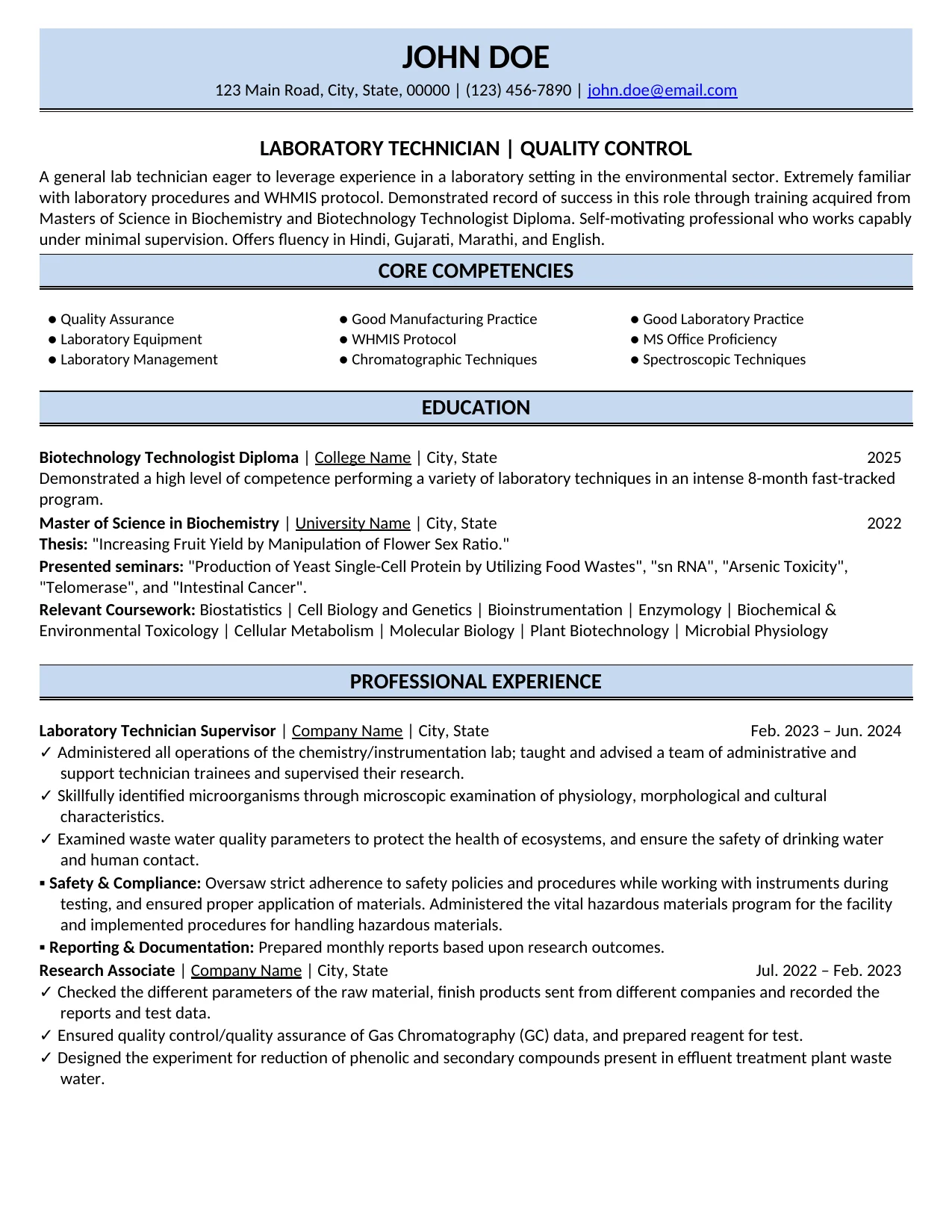
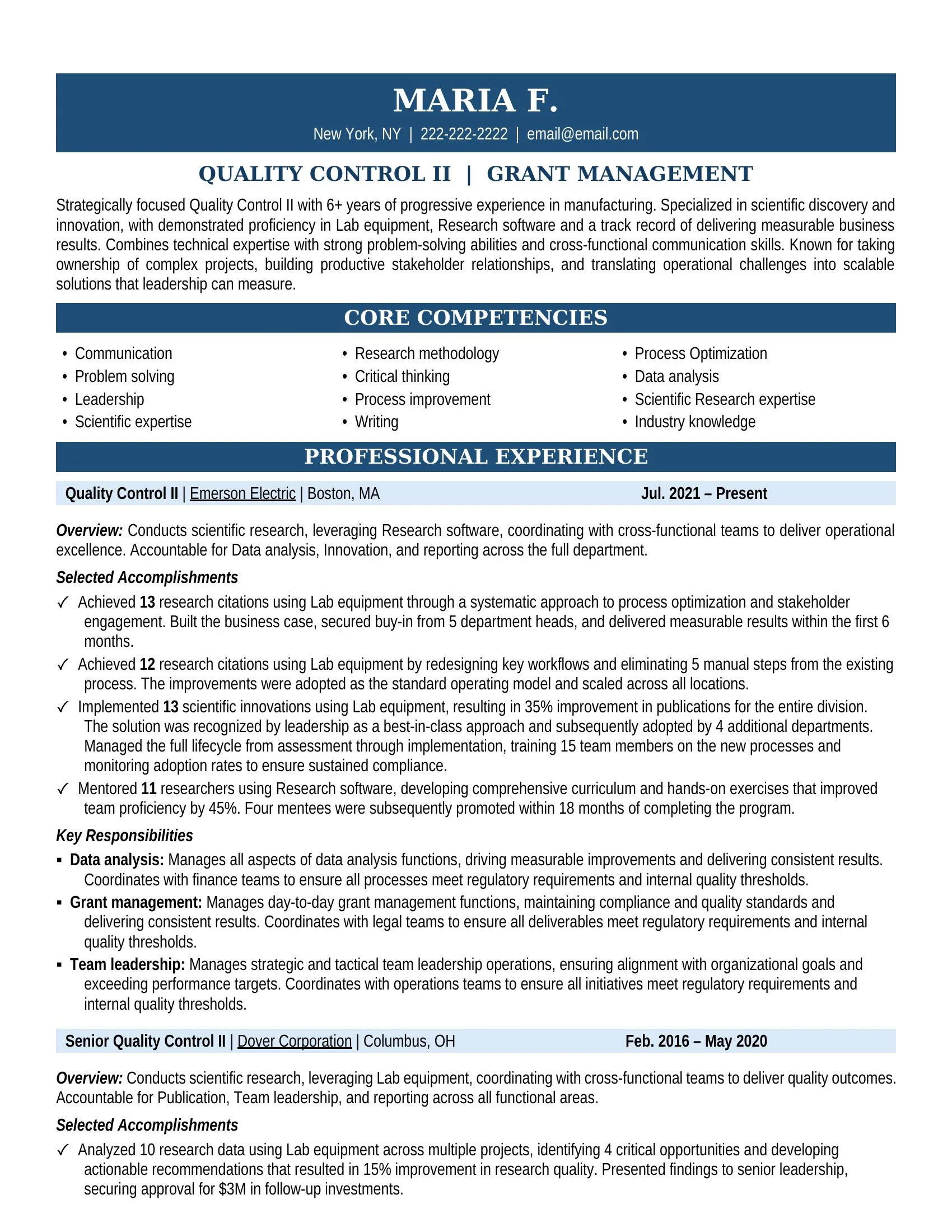
Each chemicals resume sample below was written through our 1-on-1 interview process. Click any chemicals resume example to see the full sample and learn how we transformed their experience into proof.

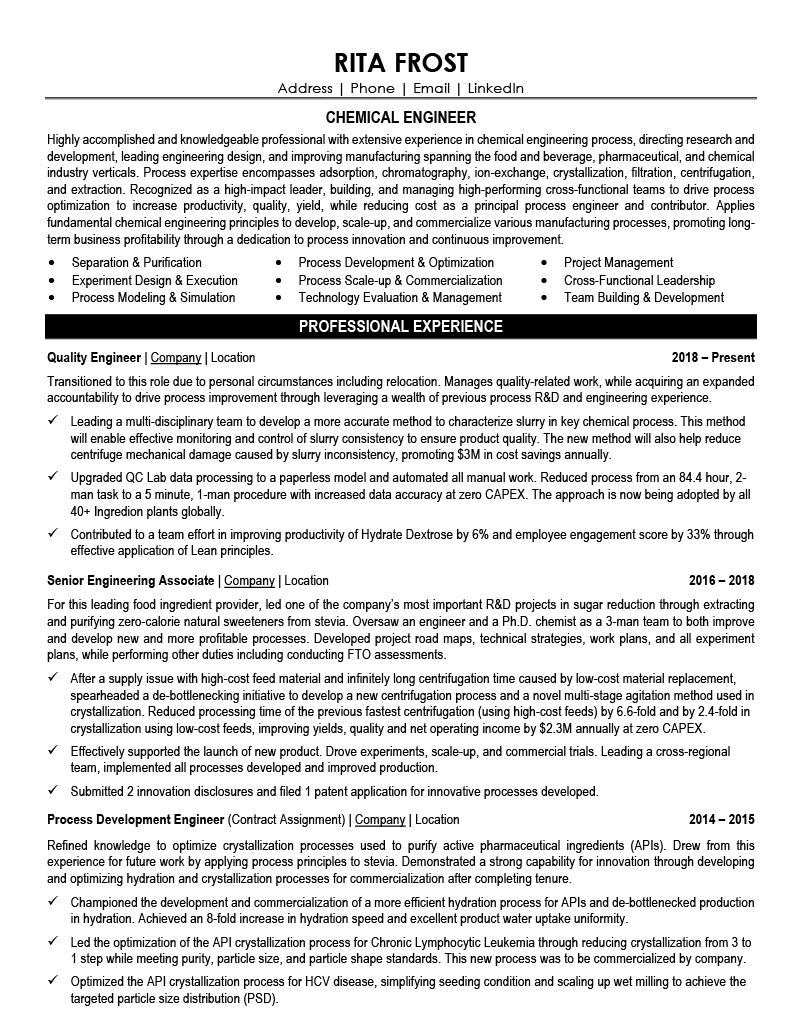
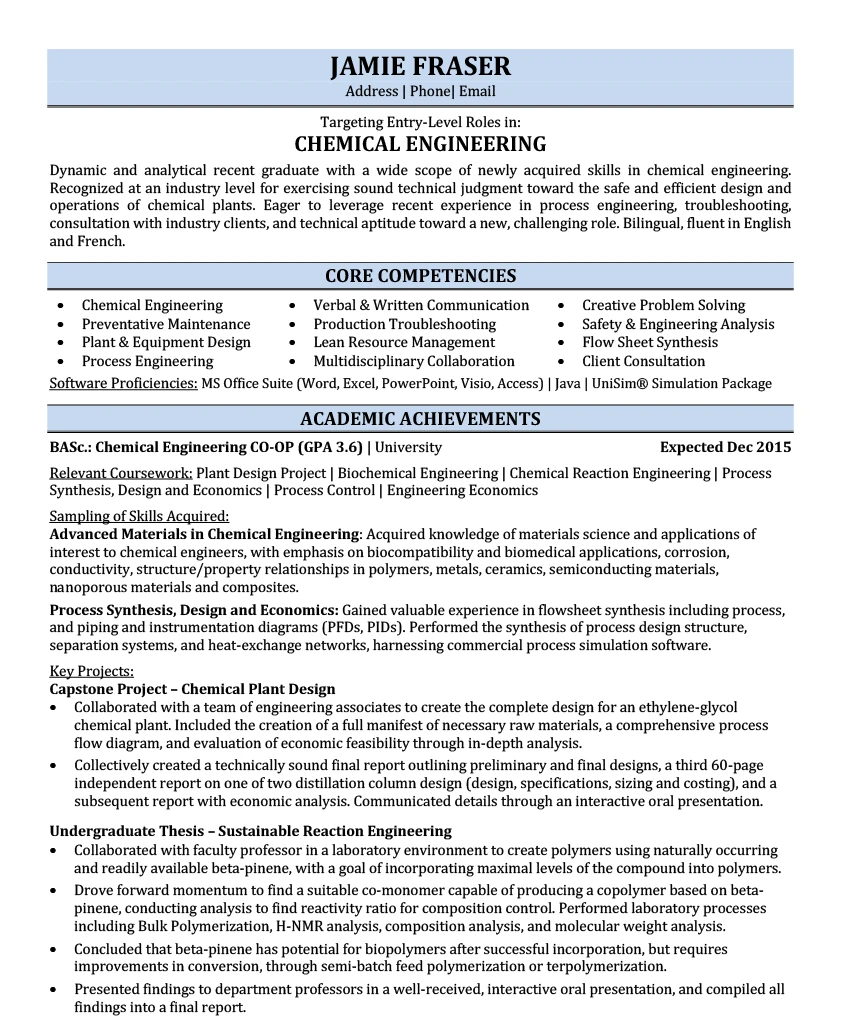
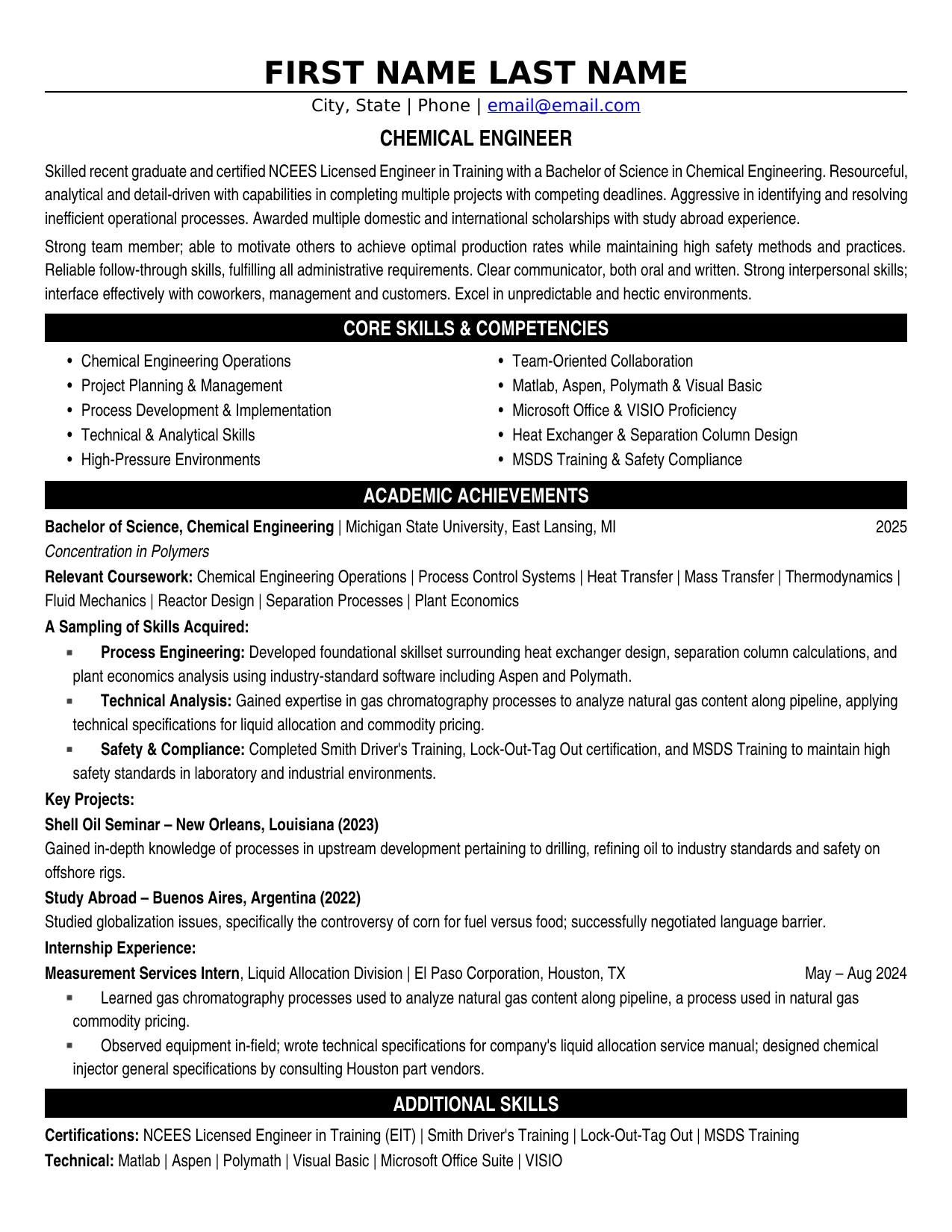
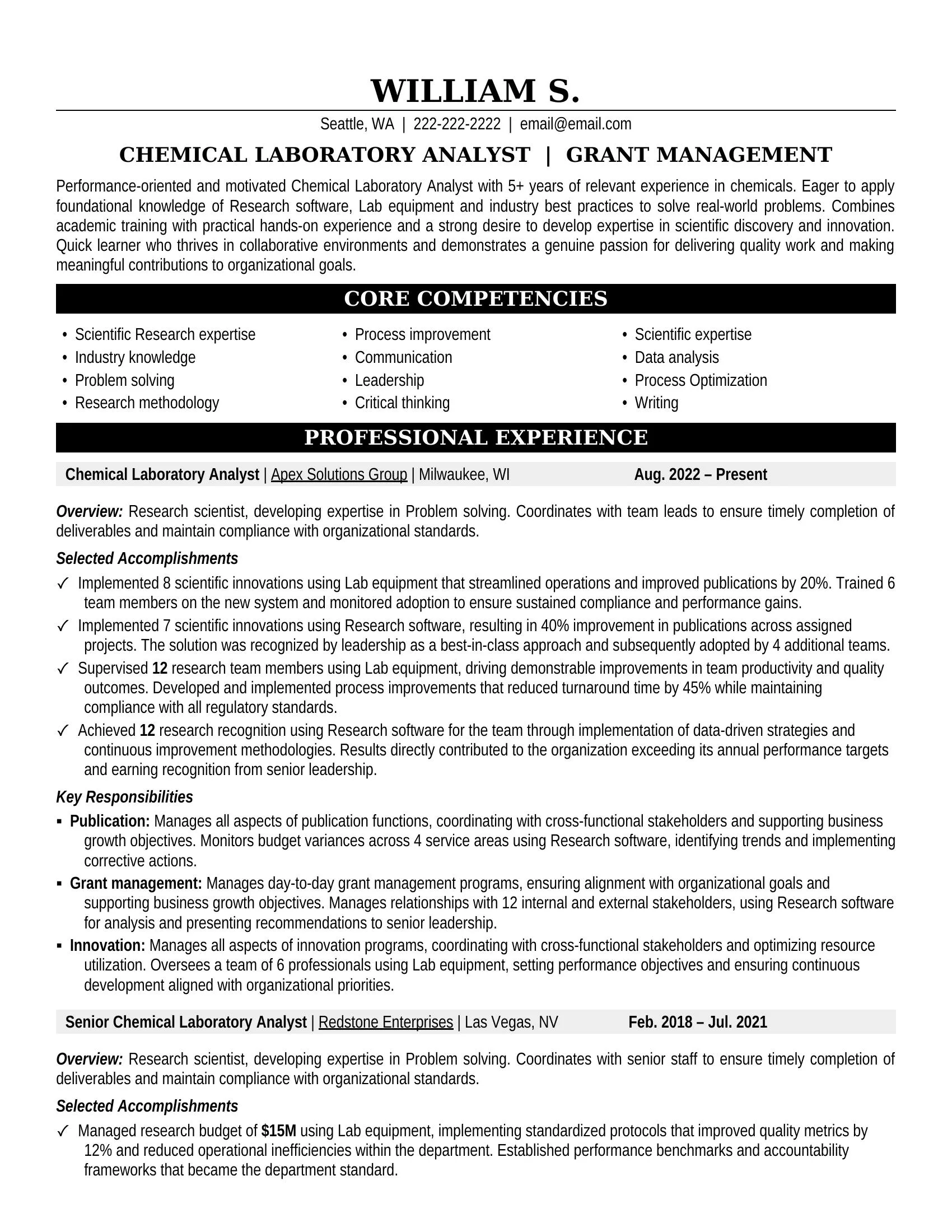
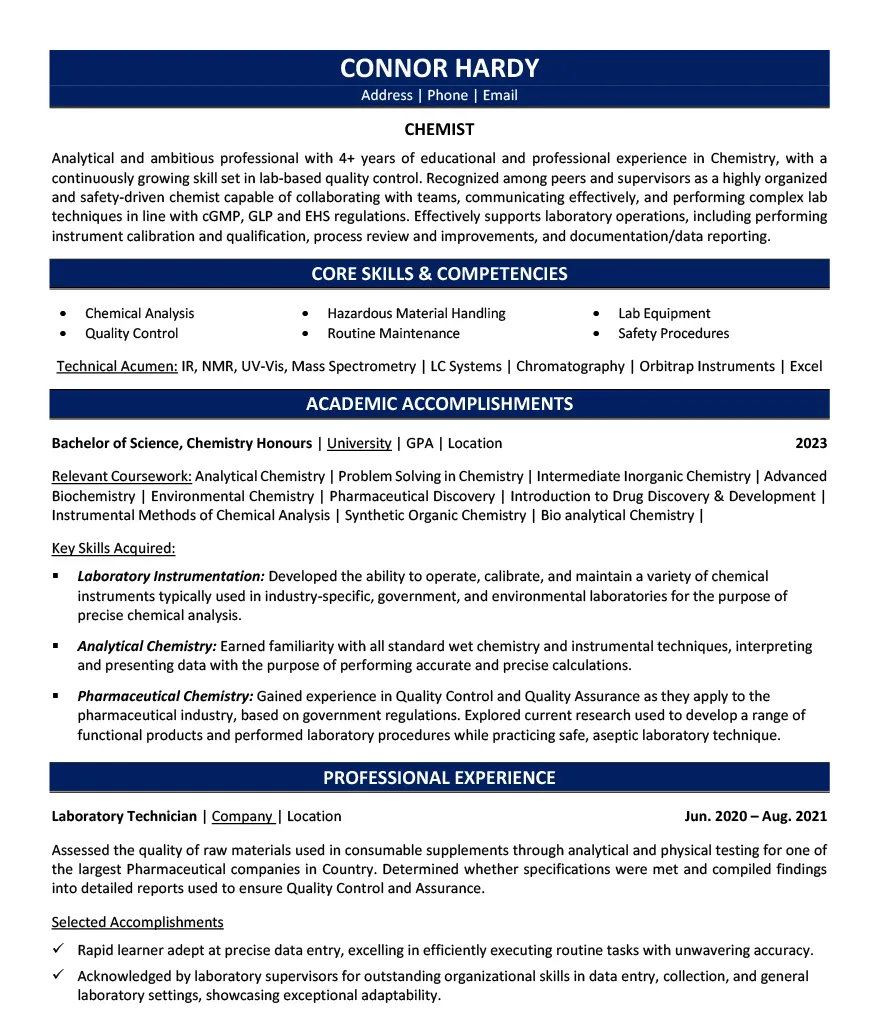
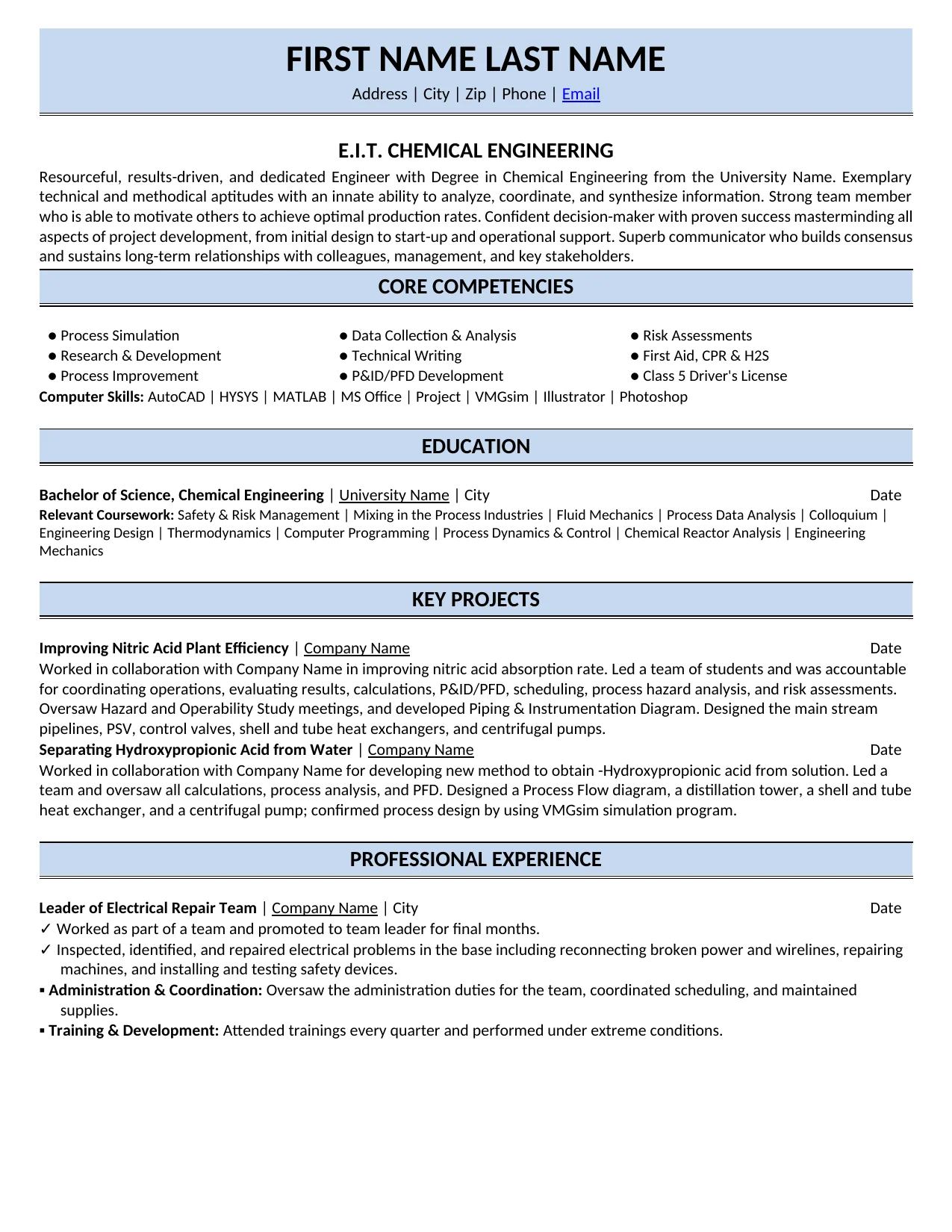
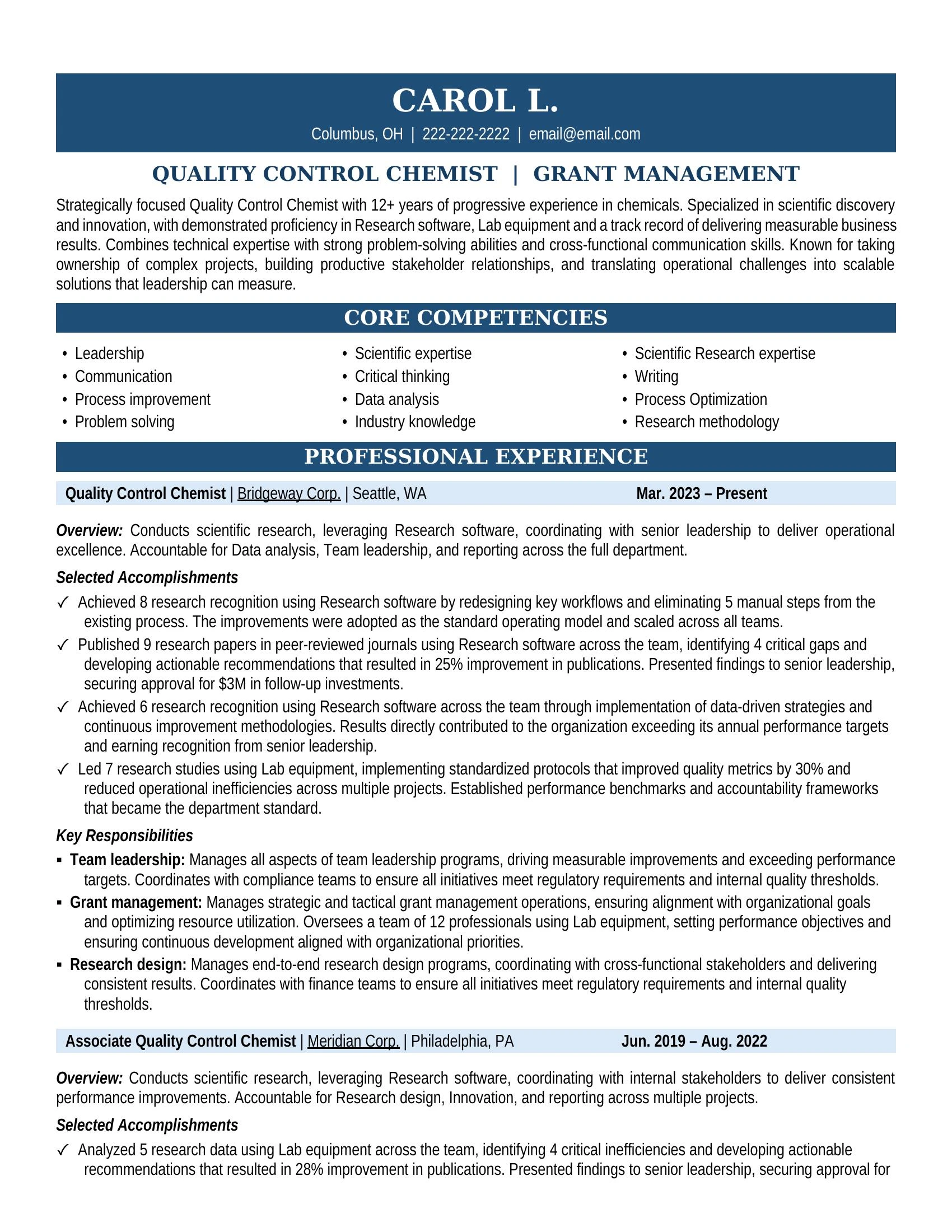
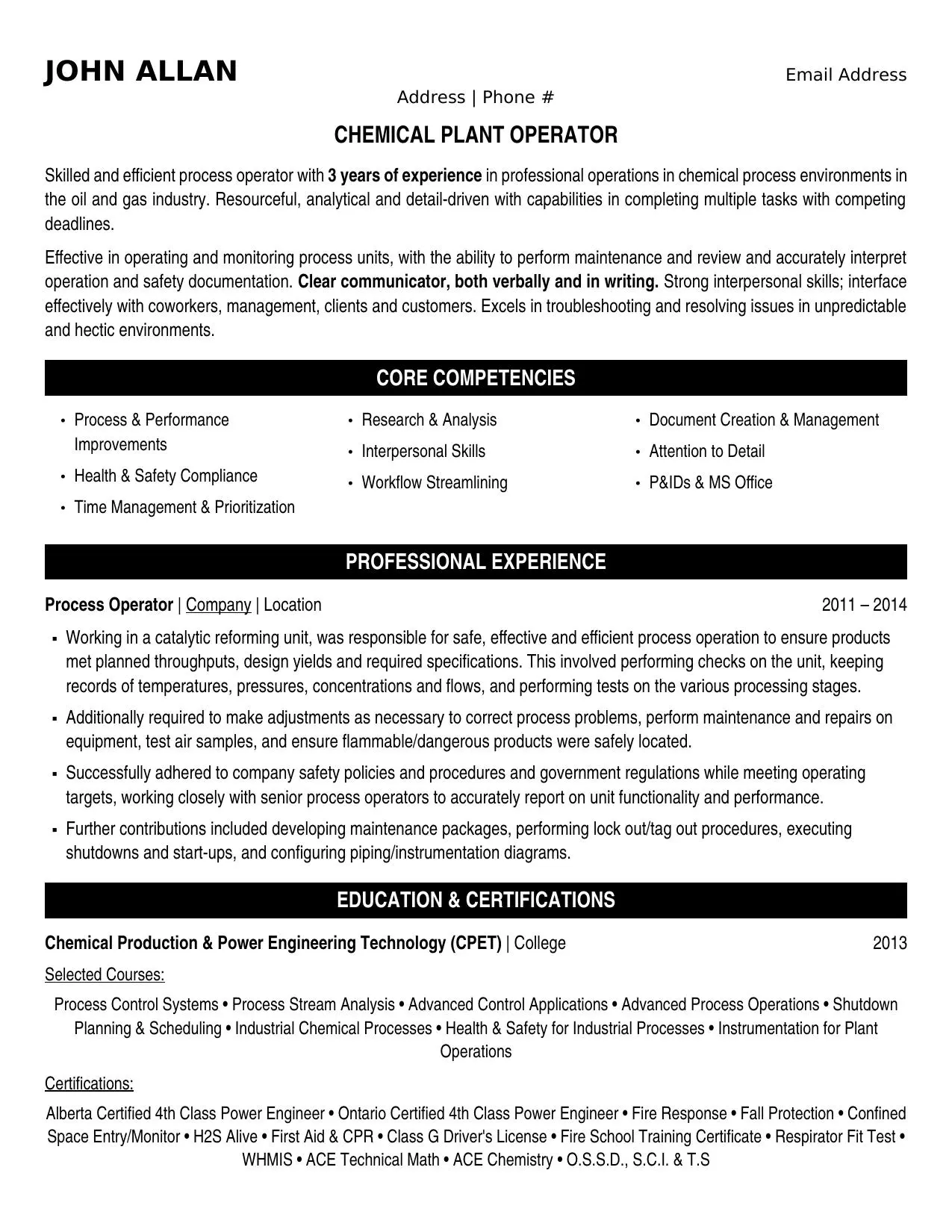
When a hiring manager reads your chemicals resume, they should think:
"This person has solved the exact problems we're facing."
What were the projects or initiatives you worked on? We probe to understand the scope, the stakes, and the significance.
"Tell me about the biggest project you led last year..."What were the goals of the project? The company's objectives? We connect your work to business outcomes.
"What was the company trying to achieve with this?"What systems, processes, and strategies did you implement? This is where your expertise becomes visible.
"Walk me through how you actually made this happen..."What challenges did you face? What systems did you implement to overcome obstacles?
"What was the biggest challenge, and how did you solve it?"See how our interview process uncovered achievements and turned them into interview-winning proof.
Get Your Chemicals Resume Written
Chemicals jobs average 40 applicants per position. You're competing against 800 candidates. Our chemicals resume examples show how to stand out.
Data based on LinkedIn job postings. Updated Mar 10, 2026.
Here's the math most job seekers don't do:
Your chemicals resume must stand out against 800 professionals.
What makes you different is the story behind the projects.
Get Your Chemicals Resume WrittenEvery chemicals resume example on this page was written through our 1-on-1 interview process. We extract achievements you'd never think to include.
We identify keywords and achievements that get chemicals resumes noticed.
Targeted questions about your chemicals projects and results.
Transform responsibilities into quantified achievements.
ATS-optimized resume in 3 business days + 14-day revisions.
80% of chemicals positions are never advertised. Get your resume directly into the hands of recruiters filling confidential searches.
When you purchase our Resume Distribution service, your resume goes to 450+ recruiters specializing in chemicals — included in Advanced & Ultimate packages.
| Agency | Location |
|---|---|
|
HA
Hays Specialist Recruitment
|
Nationwide |
|
RA
Randstad Staffing Agency
|
Nationwide |
|
KE
Kelly Services Workforce Solutions
|
Nationwide |
|
MA
ManpowerGroup Talent Solutions
|
Nationwide |
|
AD
Adecco HR Services
|
Nationwide |
The chemicals industry averages 40 applicants per position across 5,000 active job postings — but competition varies dramatically by function. Chemical Engineer roles attract heavy interest from both new graduates and experienced professionals. Quality Control Chemist positions draw candidates from pharmaceutical and manufacturing backgrounds as well. Analytical Chemist roles are competitive at senior levels where research budgets reach into the millions. Apply to 20 positions in a typical 30-day search and you're one of roughly 800 candidates competing. In the chemical industry, the resume that says "Analytical Chemist managing $10M research budget with 11 peer-reviewed publications" beats "conducted laboratory research" every time.
Because chemical industry careers produce outcomes that questionnaires never capture. A Chemist who "conducted research" could mean anything. Our interview uncovered one client who managed a $1.5M research budget, published 10 papers in peer-reviewed journals, and secured $1.2M in follow-up grants. A Chemical Engineer who "analyzed data" becomes someone who analyzed 11 research data sets across multiple projects, securing $2.5M in follow-up investments. Our Analytical Chemist sample revealed someone overseeing 150+ employees with full P&L responsibility and a $10M research budget. A QC Chemist who "performed testing" becomes someone improving quality metrics by 30% and establishing department-wide accountability frameworks. A questionnaire captures these as one-line bullets. The interview captures the full scope.
They're screening for measurable research output and operational impact — not degrees or technique lists. For analytical and research roles (Analytical Chemists, Chemists): research budget scope, publication count and impact, grant acquisition, and process improvement outcomes (our Analytical Chemist sample shows $10M budget, 11 publications, $3M in secured investments). For engineering roles (Chemical Engineers, EITs): project scope, team leadership, process optimization results, and stakeholder management (our Chemical Engineer sample shows 12-person teams and $2.5M in follow-up investments). For quality roles (QC Chemists, Lab Analysts): testing throughput, quality metric improvements, and regulatory compliance scope (our QC Chemist shows 30% quality improvement). For early career roles (EITs, Graduates): capstone projects, certifications, conference presentations, and measurable contributions. The question isn't whether you have a chemistry degree — it's whether your resume proves what your science has produced.
It matters fundamentally — these are different career tracks that operate under different metrics and different regulatory frameworks. Research (Analytical Chemists, Chemists) measures publication output, research budget scope, grant acquisition, and scientific innovation under GLP. Quality Control (QC Chemists) measures testing accuracy, quality metric improvements, regulatory compliance, and process standardization under GMP. Engineering (Chemical Engineers, EITs) measures project scope, process optimization, team leadership, and operational efficiency. Laboratory Analysis (Lab Analysts, Lab Technicians) measures throughput, innovation implementation, and research support outcomes. During your interview, our writers identify your specific function and extract the metrics and regulatory frameworks that matter in your lane — not generic "chemical industry" language.
Our chemicals resume packages are based on career level and interview depth — from a 30-minute early career session to a 90-minute executive interview. When evaluating price, consider what the number actually buys. A company charging $99: after the company takes its margin, the writer earns $40-60 — enough for about 45 minutes of total work including writing. That's a questionnaire reformat that produces "conducted laboratory research and performed chemical analysis." Our Professional-level interview alone is 60 minutes, followed by job posting analysis, drafting, and revisions — producing "Analytical Chemist managing $10M research budget, 11 peer-reviewed publications, $3M in secured follow-up investments." View current packages and pricing.
We offer a 90-Day Interview Guarantee. If you don't land interviews within 90 days of receiving your final chemicals resume, we rewrite it free of charge. We can make this guarantee because our interview-based process produces resumes built on the research output, quality improvements, and operational results that chemical industry hiring managers respond to. Browse the resume samples on this page to see the quality of work we deliver.